Forks, Shocks & Linkages: The Maintenance Most Riders Wait Too Long to Do
Mountain bikes have become incredibly capable machines. Modern suspension lets us ride faster, carry more speed through rough terrain, and tackle trails that would have been nearly impossible on bikes from a generation ago.
But there’s a catch: all those moving parts need maintenance.
Your fork, rear shock, and suspension linkage are constantly moving while being exposed to dust, mud, water, grit, and sweat. And unlike a worn chain or brake pad, suspension wear isn't always obvious. Performance can deteriorate gradually enough that you don't realize how bad things have gotten—until the bike is serviced.
At Tenafly Bicycle Workshop, we recommend servicing your suspension and linkage at least once a year, with more frequent service for riders putting in big mileage or regularly riding in muddy, wet, or dusty conditions.
What Do FOX and RockShox Recommend?
The suspension manufacturers themselves recommend regular service based on riding hours—not simply waiting until something feels wrong.
FOX recommends a full fork or shock service at approximately 125 riding hours or annually, whichever comes first. Severe riding conditions can require more frequent maintenance.
RockShox service intervals vary by product, but many current forks call for lower-leg service around every 50 riding hours, while many rear shocks recommend an air-can service at similar intervals. More comprehensive damper and spring service is typically required around 200 riding hours, depending on the specific model.
Those hours can accumulate faster than you think.
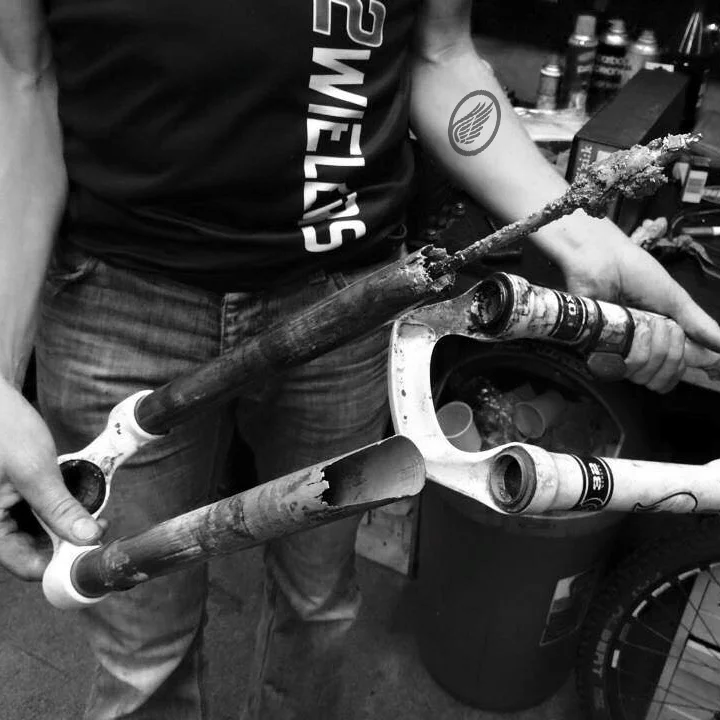
Ride three hours a week and you'll put roughly 150 hours on your suspension in a year. Ride several days a week and you can hit manufacturer service intervals in a matter of months.
And conditions matter.
The muddier, wetter, and dustier your trails are, the shorter your service intervals should be.
Your Suspension Doesn't Have to Be Broken to Need Service
One of the biggest misconceptions about suspension maintenance is that you should wait until your fork or shock starts leaking or stops working properly.
By that point, you've often waited too long.
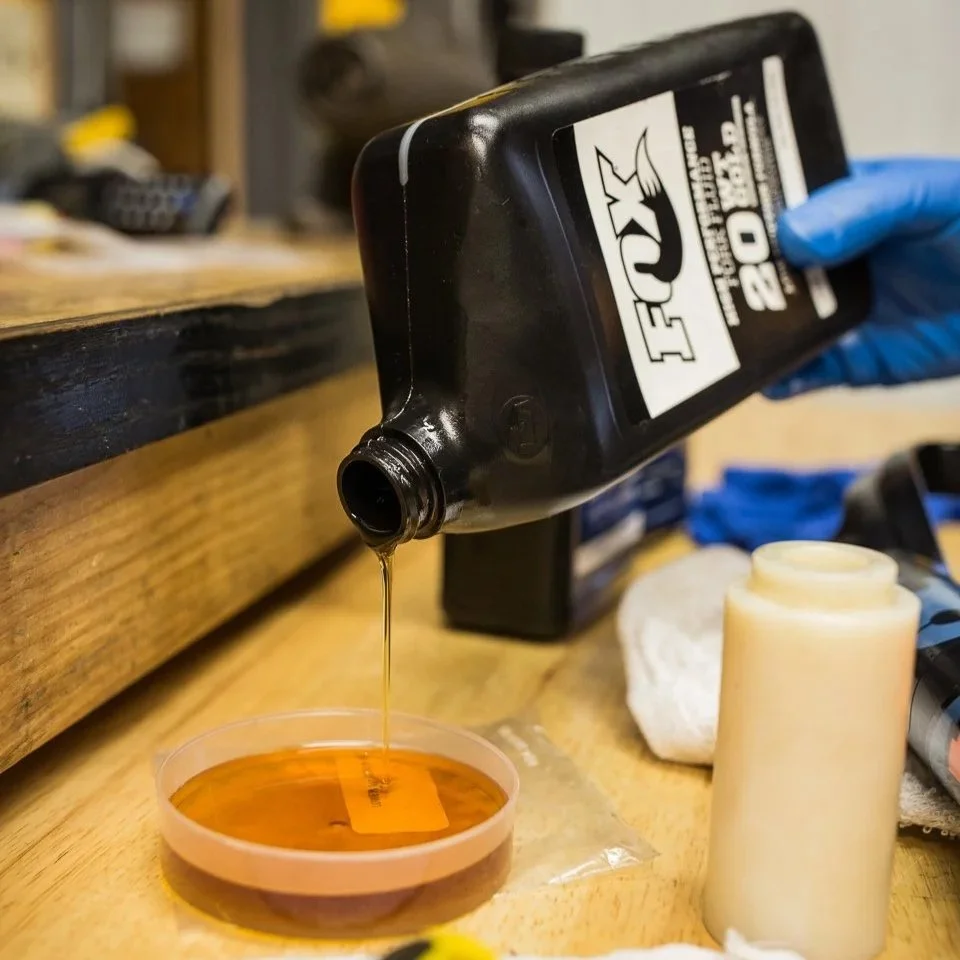
Inside your fork and shock are seals, bushings, lubricants, O-rings, and other components that are constantly moving under load. Lubricants become contaminated. Seals wear. Dirt works its way past wipers. Internal friction increases.
The change happens gradually.
Your suspension may begin to feel less sensitive over small bumps, harsher through rocks and roots, or less controlled deeper in its travel. Because the deterioration happens slowly, many riders simply adapt to it.
Then we service the suspension.
Suddenly the fork moves freely again, the rear wheel tracks the ground better, and the bike feels like it gained new suspension.
Good suspension service isn't just about preventing failure. It's about keeping the bike riding the way it was designed to ride.
Don't Forget the Linkage
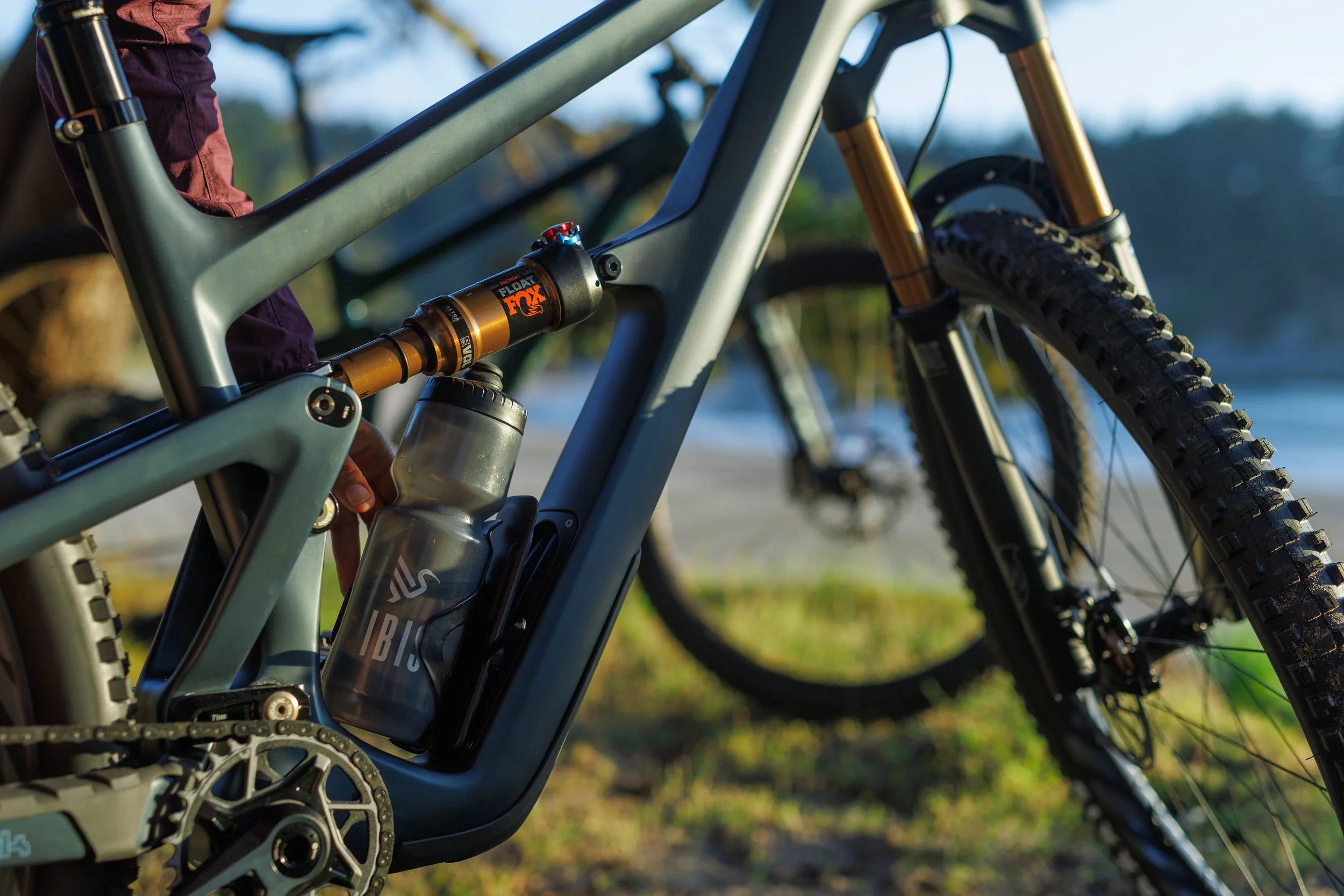
Fork and shock service gets most of the attention, but on a full-suspension mountain bike there's another entire system working underneath you: the suspension linkage.
Every time your rear suspension moves, the linkage pivots rotate through bearings and hardware.
Those bearings live in a pretty hostile environment. Water, dirt, sweat, pressure washing, stream crossings, and countless suspension cycles eventually take their toll.
That's why we recommend a linkage service approximately once a year for regularly ridden full-suspension mountain bikes.
During linkage service, the suspension system is disassembled so the bearings, pivot hardware, axles, and contact surfaces can be inspected, cleaned, lubricated, and serviced or replaced as necessary.
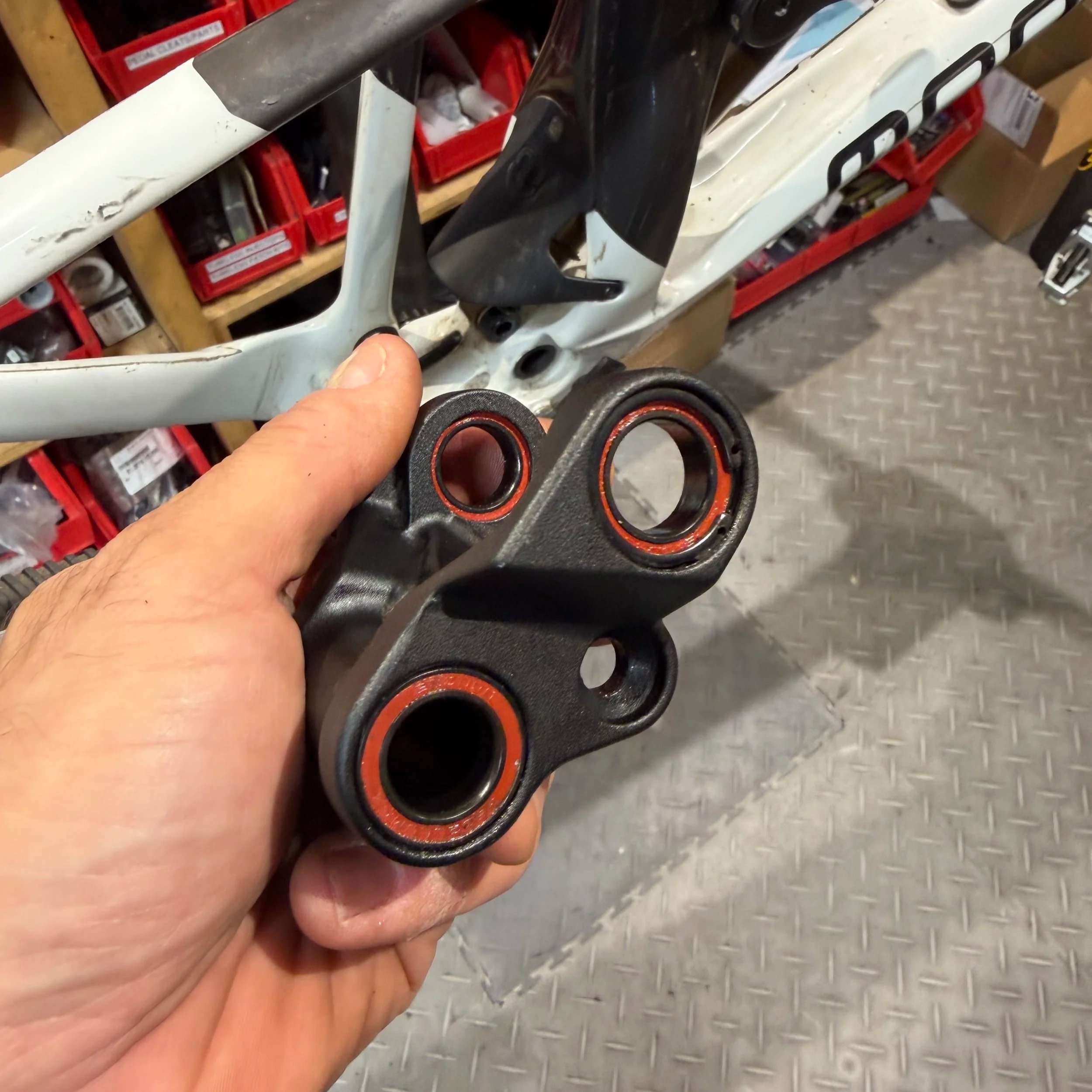
A Bad Bearing Can Become an Expensive Problem
This is where preventative maintenance really matters.
A worn bearing may initially show up as a little creak, stiffness, or play in the rear end. Ignore it long enough and the bearing can become rough or completely seized.
Now you have a bigger problem.
Instead of the bearing rotating as the suspension moves, a seized bearing can force movement into components that were never intended to move against each other. Pivot hardware can wear. Axles can become damaged. Linkage components can be stressed. Bearing seats can be damaged.
What started as routine maintenance can become an expensive repair.
Even before permanent damage occurs, worn or seized bearings can dramatically change how your bike rides. Your carefully engineered rear suspension can't perform correctly if its pivots don't move freely.
The result can be reduced small-bump sensitivity, binding, lateral play, creaking, inconsistent suspension movement, and a generally harsh or disconnected feeling from the rear of the bike.
If your bike doesn't feel as good as it used to, the shock isn't necessarily the problem.
Sometimes it's everything connecting the shock to the bike.
Listen to Your Bike
Creaking. Clicking. Knocking. Play in the rear end. Suspension that suddenly feels harsh. A fork that doesn't move as smoothly as it once did.
Your bike is usually trying to tell you something.
At Tenafly Bicycle Workshop, we specialize in mountain and gravel bikes, and we're experts at diagnosing the noises and sounds your bike is making that other shops sometimes ignore.
We also love challenges.
Bring us the work that no other shop will touch or can fix. With a machinist, motorcycle mechanic, and helicopter mechanic on staff, we tend to think a little differently when it comes to diagnosing and repairing bikes.
From basic adjustments to complete suspension and linkage rebuilds, our goal is simple: fix it correctly and keep your bike riding the way it's supposed to.
How We Service Mountain Bikes
MTB Tune Up
Starting at $150
Our standard service for full-suspension mountain bikes includes an inspection and basic cleaning, gear and brake adjustments, inspection of rotating components, suspension linkage check, suspension function check, complete safety and function inspection, and a test ride and final adjustment.
MTB Full Tune Up
Starting at $230
For bikes needing more attention, our Full Tune Up adds a thorough cleaning, drivetrain cleaning and adjustment, brake adjustment and alignment, and inspection, lubrication, and adjustment of rotating components along with suspension and linkage inspection.
Suspension, linkage service, and brake bleeds can be added as needed.
The Full Shebang! — MTB Full Service
Starting at $600
This is the spa treatment for your second spouse.
Our deluxe full-suspension mountain bike service takes the bike well beyond a normal tune-up. We like to call it:
"From clapped to brapped."
The Full Shebang includes:
MTB Full Tune Up
Complete bike detail
Full drivetrain ultrasonic cleaning, service & update
Brake bleed & flush with piston reset
In-house fork & shock service
Linkage service & rebuild
Tubeless sealant cleanout & replenishment
Suspension tuning and setup specifically for the rider
The goal isn't simply to make everything work.
It's to make your mountain bike feel like your mountain bike again.
Don't Wait Until Something Breaks
Suspension maintenance is preventative maintenance.
If you ride your mountain bike regularly, plan on having the fork, shock, and linkage inspected and serviced at least annually. High-mileage riders and riders regularly encountering mud, water, dust, bike parks, or especially demanding terrain should consider shorter intervals.
Waiting until your fork leaks, your shock stops holding pressure, or your linkage starts creaking and binding can turn routine service into component replacement.
Service it before it breaks. It'll ride better—and there's a good chance it'll cost you less in the long run.