Pedal Perfect
A common question we hear in the shop is “Why does this bike have pedals, but that one doesn’t?” The short answer is entry-level bikes usually include pedals, while enthusiast bikes usually do not. Intermediate level or more experienced riders prefer to choose their own pedals based on comfort, riding style, and performance. That’s why higher-end bikes are often sold without them.
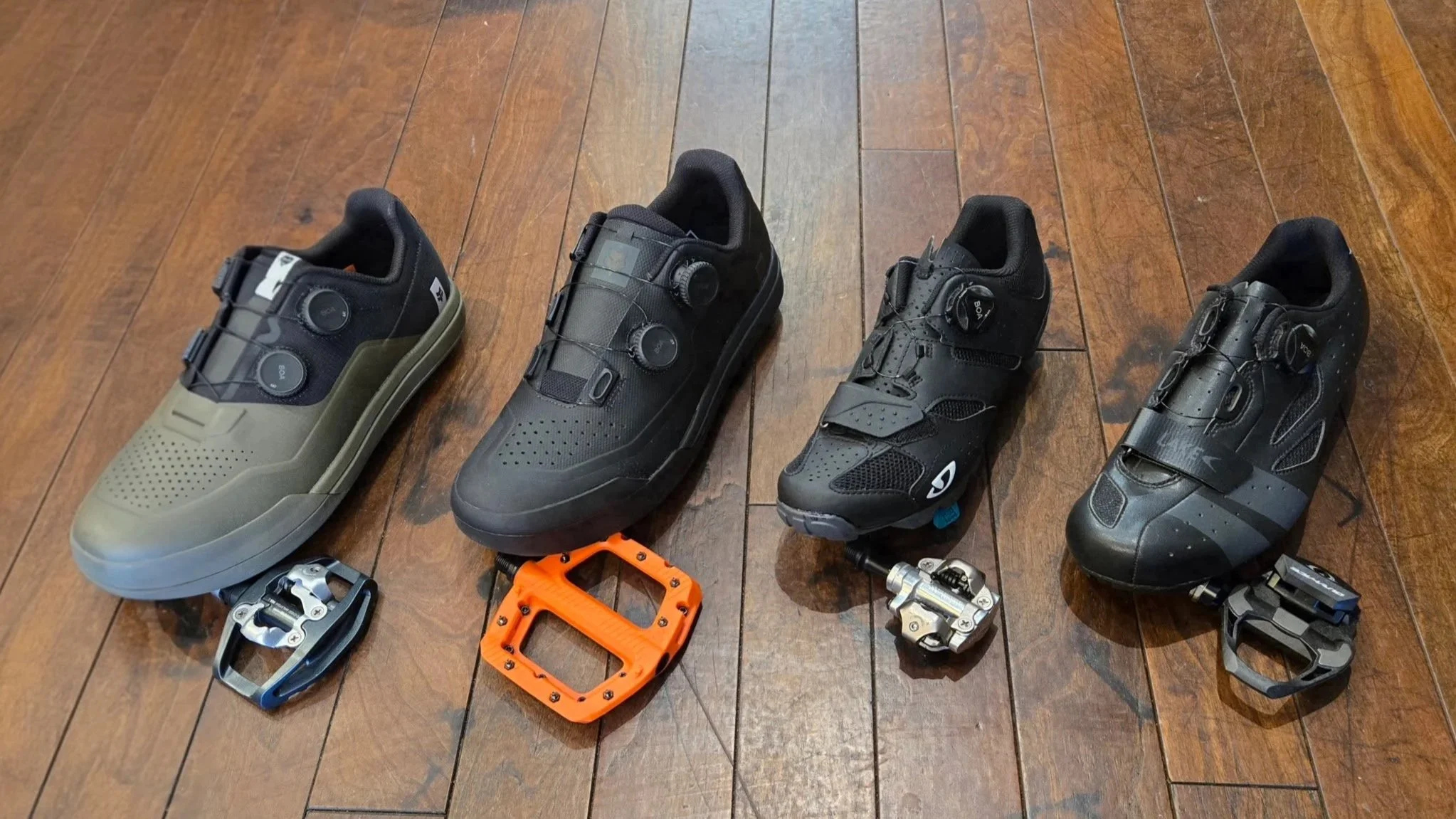
There are three main types of pedals:
Flat pedals
Clip-in (clipless) pedals
Dual-sided (combination) pedals
Below is a quick guide to each.
Flat Pedals
Commuter / Pin-less Flats
Common on hybrid, comfort, and entry-level bikes.
✅ Pros
No special shoes needed
Inexpensive
Lightweight
Safer for casual riding
❌ Cons
Less durable construction and materials
Limited grip, especially when wet
Feet can slip easily
Best for: Casual riding, commuting, beginners
Mountain Bike Flats (With Pins)
Designed for trail and performance riding. Flat pedals do not require special shoes although there are flat pedal shoes that feature rubber that has more grip and is designed to adhere to the pins for more traction than standard soles. In addition, flat pedal shoes tend to be stiffer reducing foot fatigue on longer rides.
✅ Pros
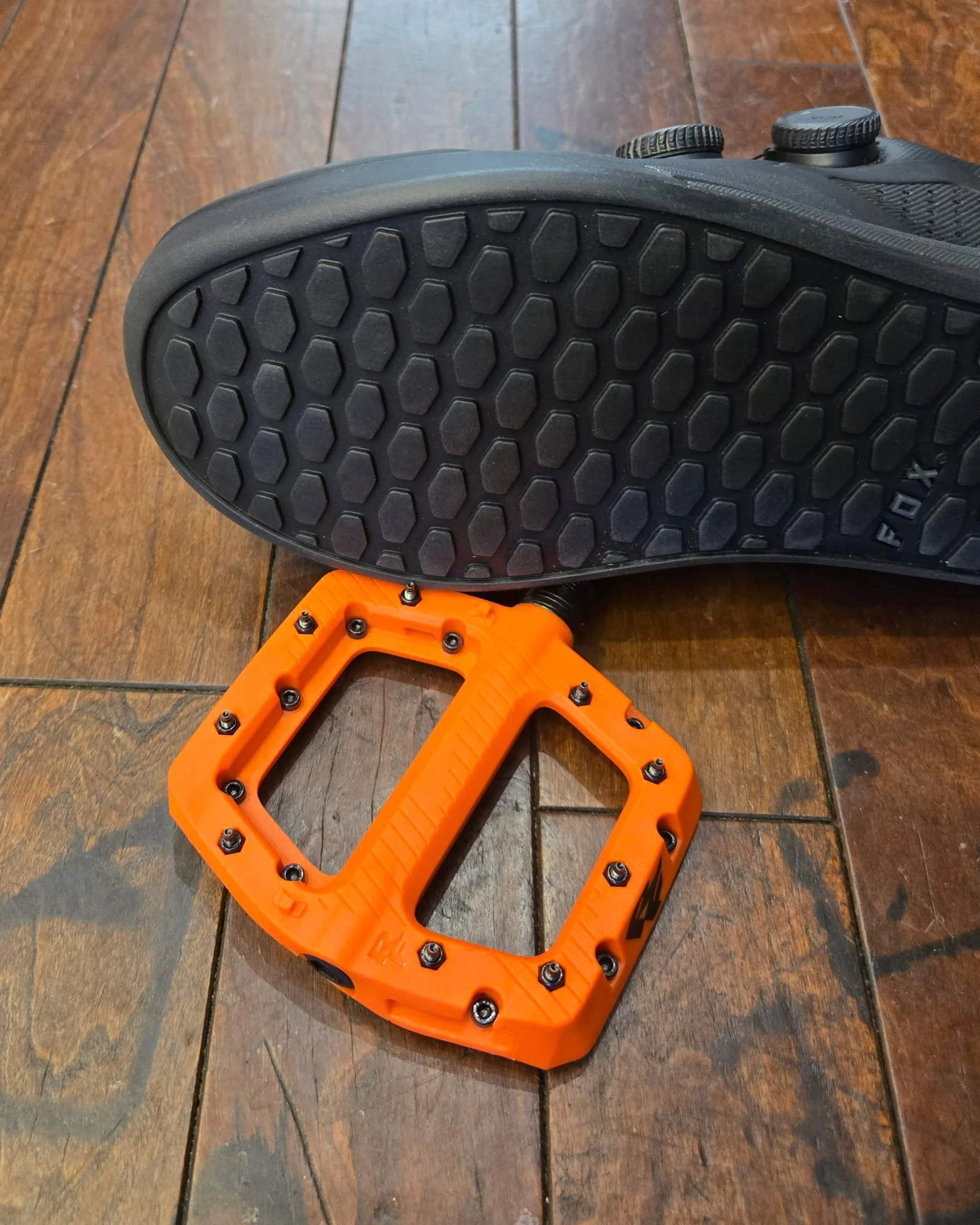
Excellent grip and control
Very durable construction and materials
No clipping system needed
❌ Cons
Pins can scrape skin
Can damage shoes
Can be heavier
More expensive than commuter pedals
Best for: Trail riding, mountain biking, and aggressive riding
Clip-In (Clipless) Pedals
These pedals connect to special shoes with cleats for better efficiency. There is a learning curve to getting in and out of these pedals. There are two main types of clip-in pedals.
Road Clip-In (Non-Walkable Cleats)
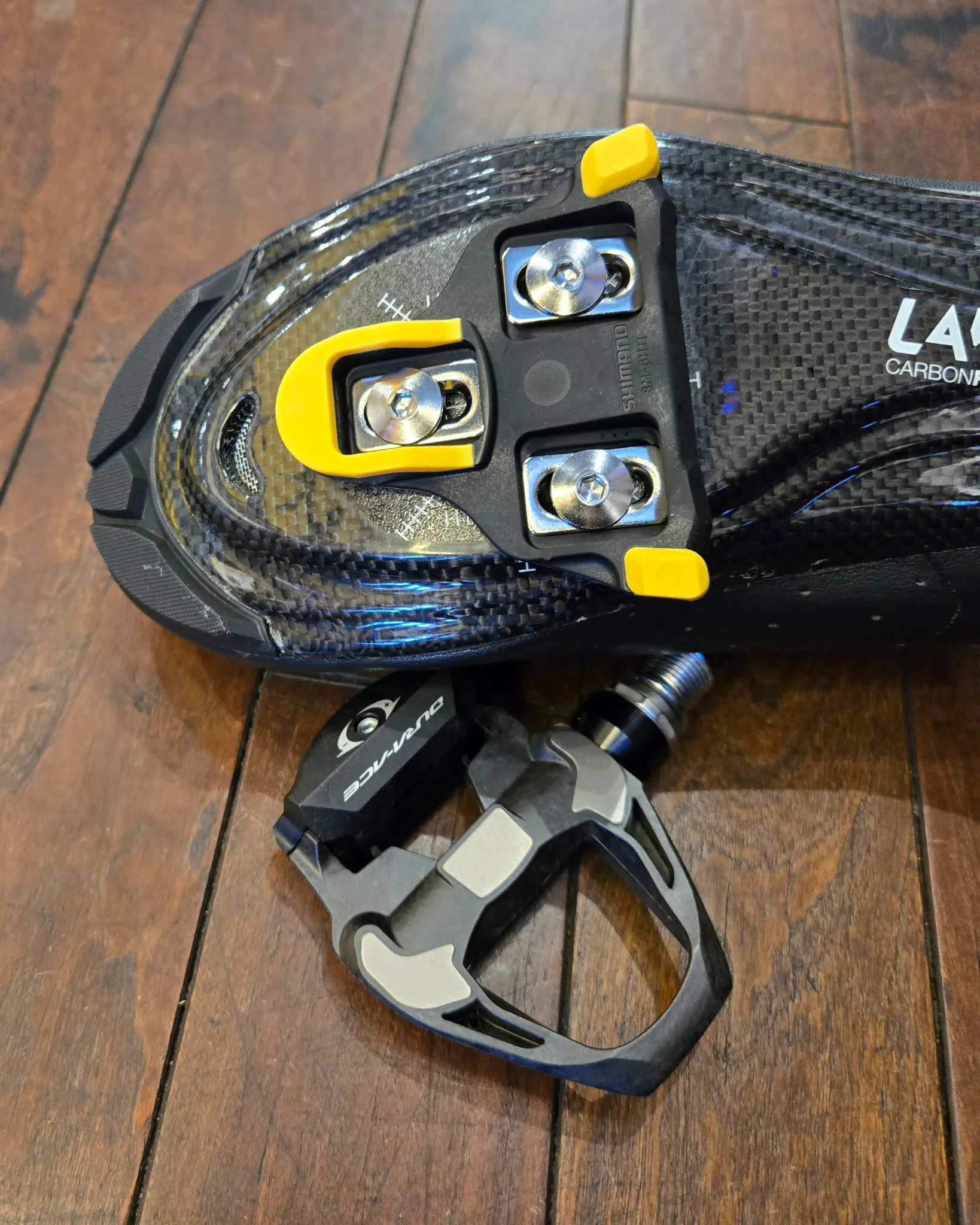
✅ Pros
Maximum power transfer
Stiffer connection and shoe
Lightweight
Very efficient
❌ Cons
Hard to walk in
Slippery off the bike
Learning curve
One Sided clip pedal entry on most models
Best for: Road cycling, fitness riding, and racing where you are not getting on and off the bike and need maximum efficiency and power. Single sided pedal entry is harder to clip in.
Mountain / Gravel Clip-In (Walkable Cleats)
✅ Pros
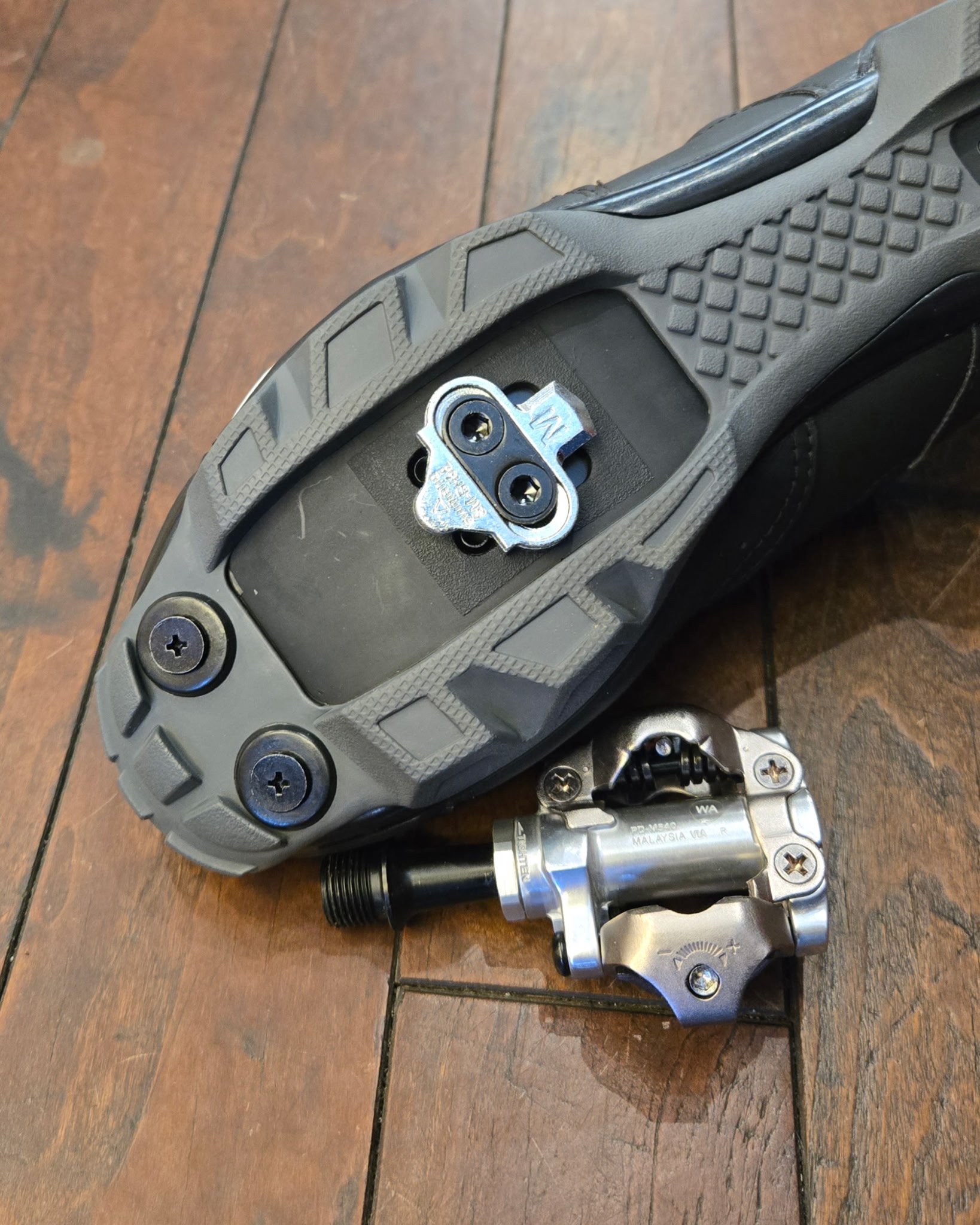
Easier to walk in with recessed cleat
Durable cleats
Works well off-road
Better mud or dirt shedding mechanism
Secure connection
Dual sided pedal entry
Different foot float options
Multiple cleat options can make clipping out easier
❌ Cons
Less efficient than road systems
Requires practice
Special shoes needed
Best for: Mountain, gravel, touring, and commuting where you tend to spend time off the bike. Dual sided pedal entry is easier to clip in to.
Dual-Sided (Combination) Pedals
One side is flat, the other clips in.
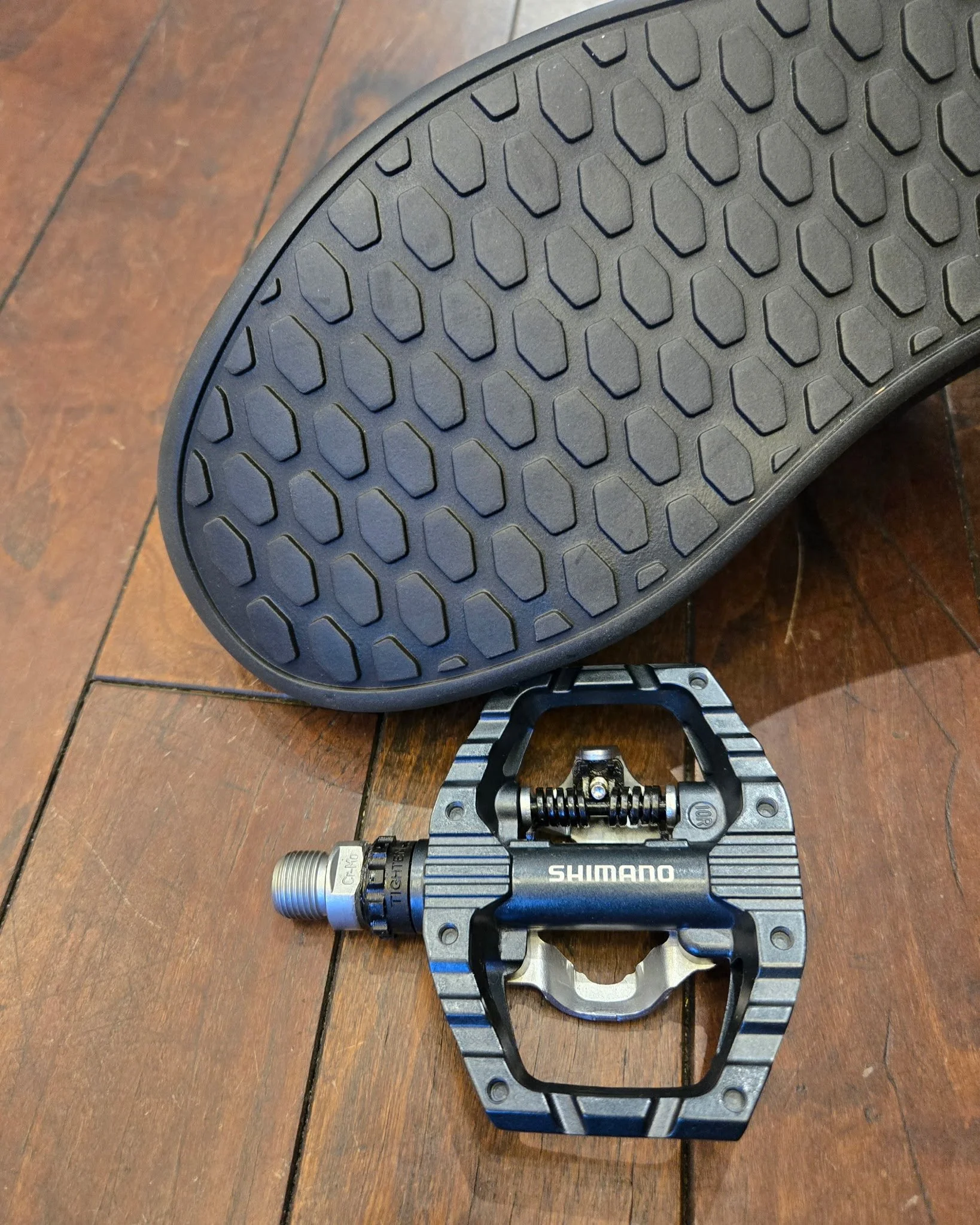
✅ Pros
Very versatile
Ride with or without cycling shoes
Great for mixed use
❌ Cons
Heavier
Smaller flat surface
Less specialized
One sided pedal entry
Best for: Commuters, recreational riders, “one-bike” riders
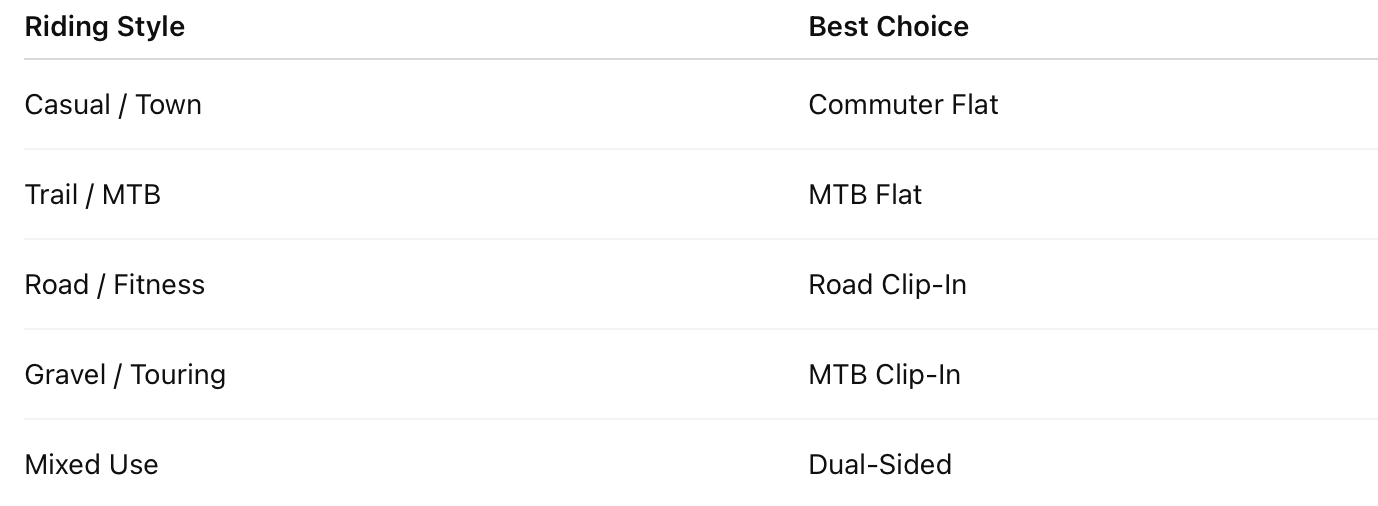
Which Pedal Is Right for You?
Why Higher-End Bikes Don’t Include Pedals
Enthusiast bikes usually don’t include pedals because:
Riders have personal preferences
Many already own pedals
Different styles require different systems
This lets riders customize their setup.
Need Help Choosing?
Not sure what’s right for you? Ask us in the shop. The right pedals make your ride more comfortable, efficient, and fun.
We’re happy to help you get set up.